Observe what is visible
Begin with facial movement, gestures, posture, distance and changes in behaviour. Separate what you actually saw from what you think it means.
About SEE — Look Again.
SEE helps you learn to read body language and understand nonverbal communication through realistic situations, practical exercises and thoughtful interpretation.
Notice more. Consider context. Explore possibilities — without treating one gesture as proof.

What is SEE?
People communicate through much more than speech. Facial expressions, eye movements, gestures, posture, the position of hands and feet, personal distance and changes in movement can all contribute to nonverbal communication.
SEE is a practical place to learn body language and practise reading the nonverbal signals people display in everyday situations. The goal is not to memorise a list of gestures and attach one fixed meaning to each. It is to notice what is visible, consider the circumstances and explore reasonable interpretations.
Whether you are learning for everyday conversations, relationships or professional situations, SEE encourages curiosity, care and a willingness to look again.
The SEE Approach
Reading body language is not mind-reading. The same visible behaviour can have different explanations depending on the person, the environment and the moment.
Begin with facial movement, gestures, posture, distance and changes in behaviour. Separate what you actually saw from what you think it means.
Crossed arms, a lowered gaze or a step backwards can mean different things in different settings. Personal habits, culture and circumstances matter.
Look at clusters of nonverbal cues and how they change over time. Consider comfort, discomfort, interest, uncertainty and other possibilities without assuming certainty.
Learn by doing
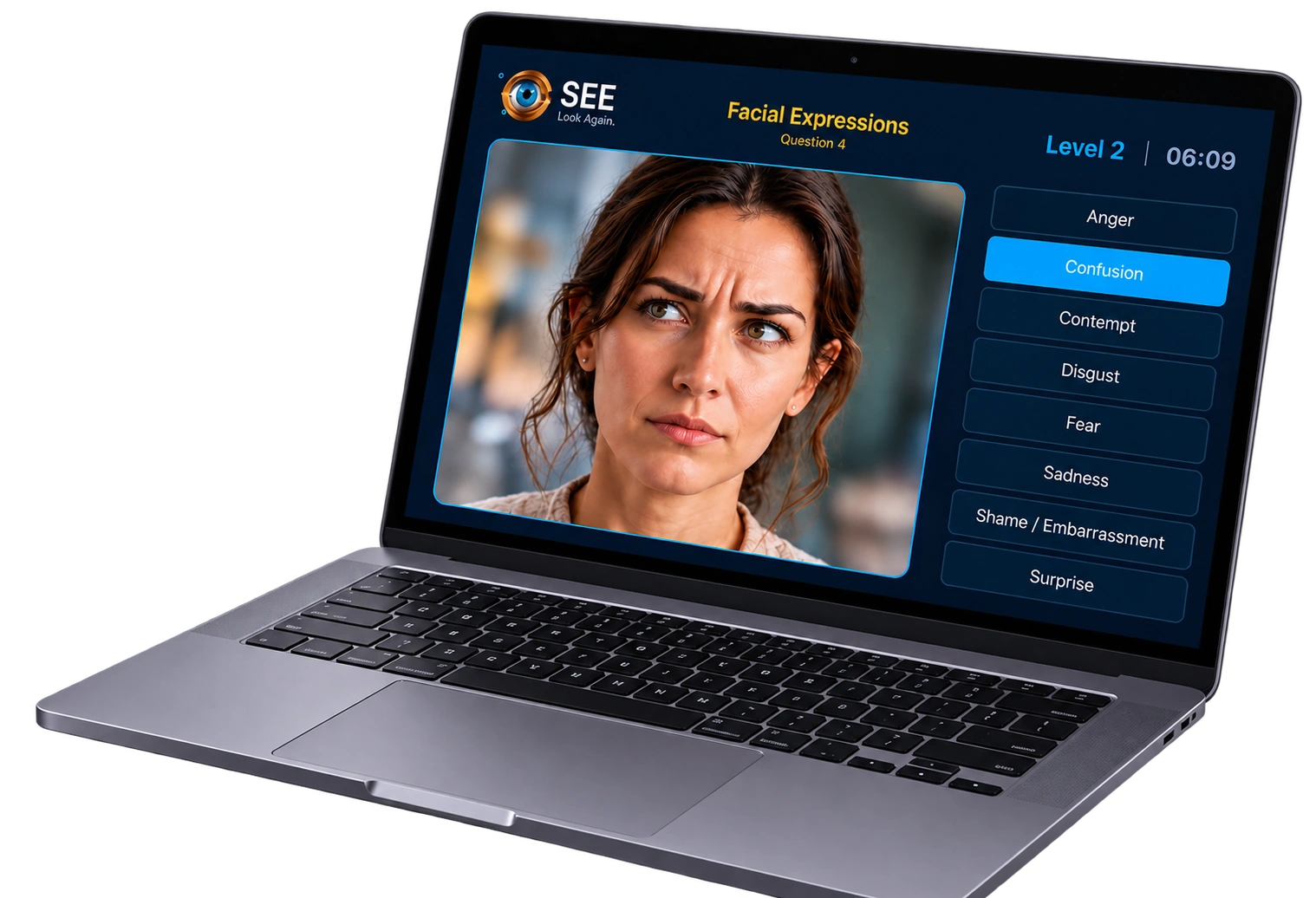
Knowing the terminology is only the beginning. SEE gives you opportunities to practise recognising facial expressions, noticing comfort and discomfort cues, and thinking about nonverbal behaviour in real-life situations.
Interactive games, free quizzes, structured body language courses and practical PDF guides support different ways of learning. Each encourages you to examine the evidence, compare interpretations and develop your skills through practice.
Explore Courses, Games & QuizzesWhat you can explore
Recognise visible expressions and consider what they might communicate.
Notice orientation, movement, changes in stance and how people use space.
Learn to observe gestures and body positioning as part of a wider picture.
Explore possible signs of ease, tension or uncertainty without treating them as fixed rules.
Read body language in conversations, social settings, relationships and workplaces.
Bring cues together, compare explanations and avoid jumping to conclusions.
Start looking again
Explore practical ways to read body language and understand nonverbal communication — one observation at a time.