
Courses
Learn to read body language and nonverbal communication, from essential cues to real-world situations.
- Diploma Body Language
- Situational Body Language
- Module assessments
- Final certificates
Body Language Training for Real Life
Learn to read body language and understand nonverbal communication through real-life examples, games and courses.

Learn to recognise gestures, posture and expressions without jumping to conclusions.
Explore how people communicate beyond words in everyday situations.
Develop body language reading skills with games, courses and quizzes.
Understand nonverbal cues in social situations, work and relationships.
What is SEE?
Learn nonverbal communication by exploring facial expressions, posture, gestures, movement, personal space and changes in comfort.
SEE teaches you how to read people's body language thoughtfully: recognise visible signals, consider the situation and compare possible meanings. Body language is not mind-reading — the same gesture can mean different things to different people.
Learn More About SEE
Learn to read body language and nonverbal communication, from essential cues to real-world situations.
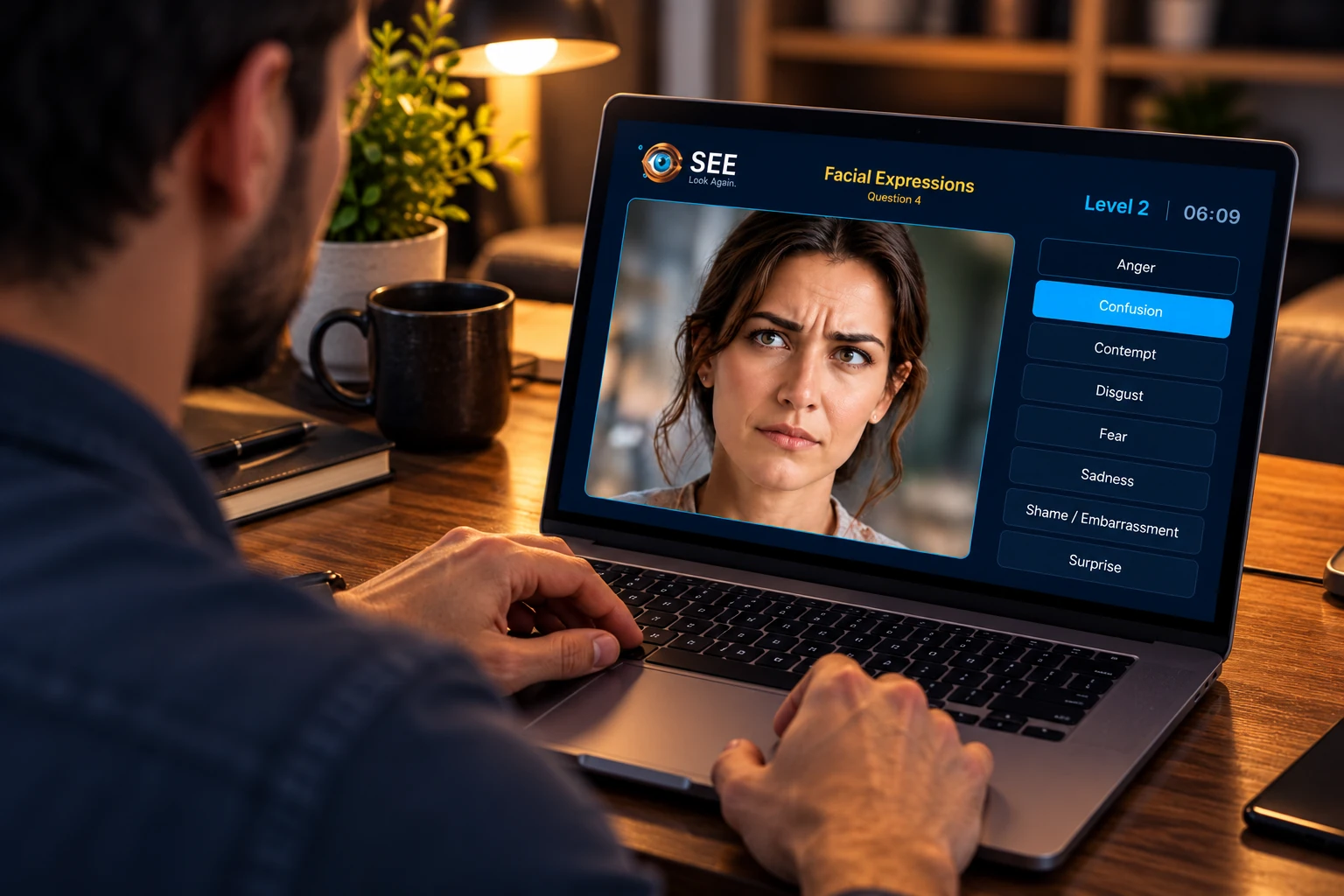
Practise reading facial expressions and body language with interactive photo games.
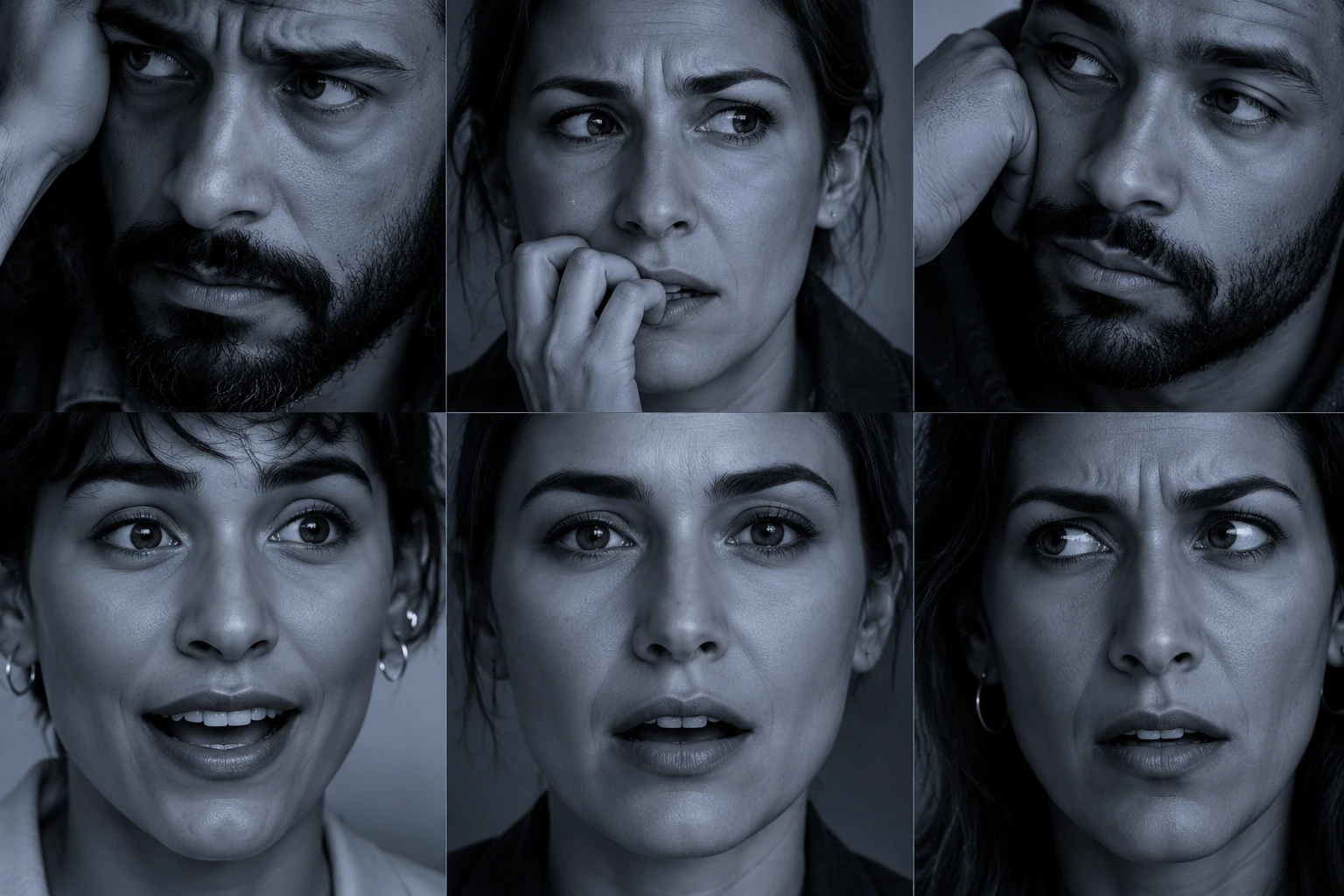
Explore free observation quizzes. The Level Test is open to everyone; other quizzes require a free SEE account.

Explore four practical PDF guides and a discounted bundle for observing nonverbal signals.
SEE Game Engine
Practise reading facial expressions, comfort and discomfort, and other nonverbal cues using realistic photographs. Our interactive body language games help you build skills through repeated practice and feedback.
See How the Games Work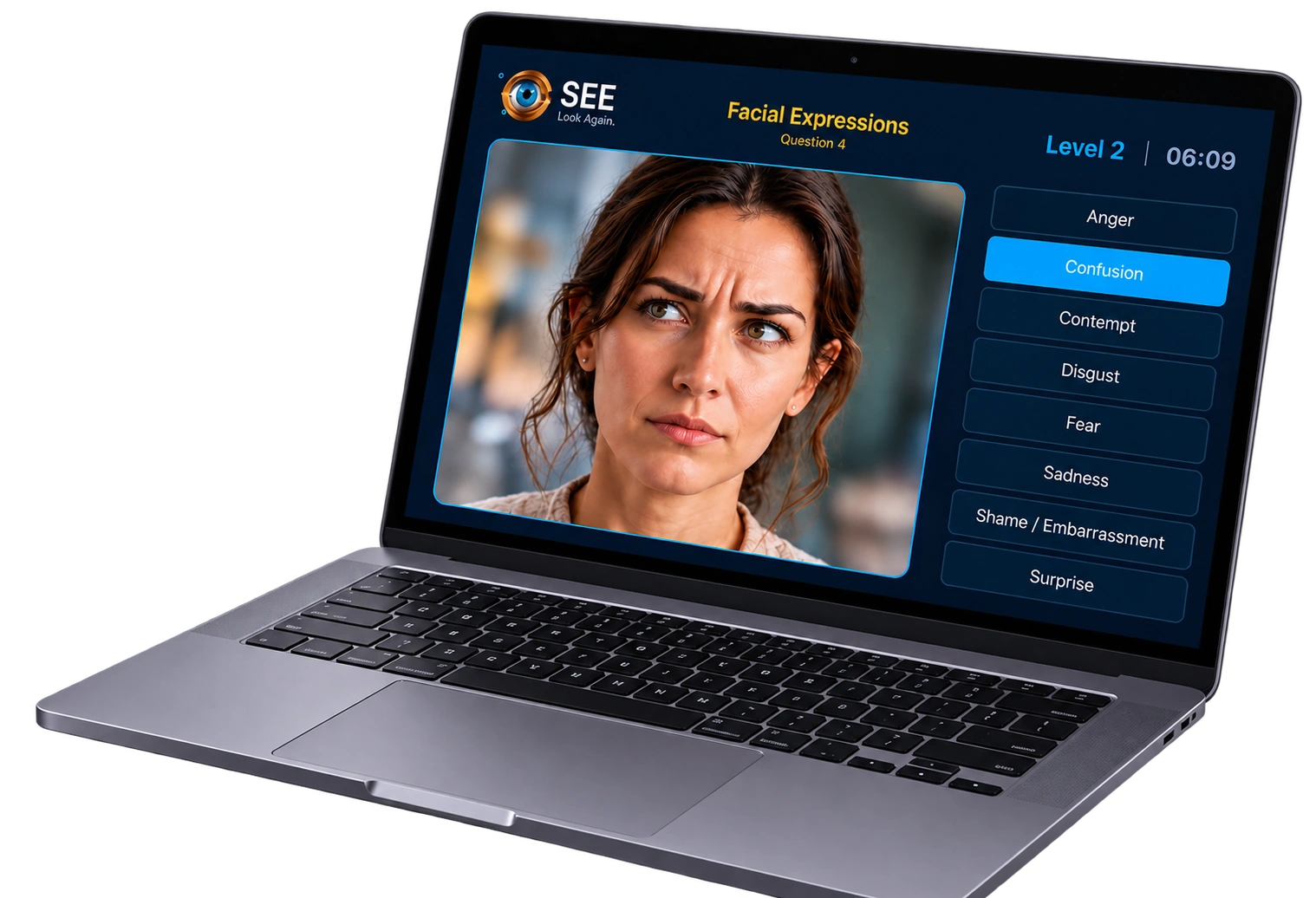
How SEE Works
Learning to read body language starts with recognising nonverbal signals, not memorising fixed rules. SEE helps you examine what people do, understand the context and explore different interpretations.
When reading body language, start with what you can actually see: posture, facial expressions, gestures, distance and changes in behaviour. Describe the cues before explaining them, so a first impression does not become an automatic conclusion.
The same crossed arms, lowered gaze or step backwards can communicate different things in different situations. Consider the environment, the interaction, personal differences and what happened before the moment you observed.
A single body language cue rarely tells the whole story. Notice how facial expressions, hands, feet, posture and movement appear together and change over time. Several cues may offer a fuller picture, but never certainty about someone's feelings.
Learn to read body language with realistic photographs, interactive games, free quizzes and structured courses. Review different possibilities, learn from feedback and practise looking again instead of settling on the first explanation.
Real-World Skills
People communicate without words through facial expressions, gestures, posture and personal space. Learning to read these nonverbal signals can help you notice more in everyday conversations — while remembering that meaning depends on the person and situation.
With SEE, you can learn body language and practise interpreting people's nonverbal communication through realistic scenarios, games, quizzes and courses. Build a more thoughtful approach to reading body language at work, in relationships and in daily life.
Join SEE TodayLOOK AGAIN · THE SEE BLOG
Explore everyday body language through real situations, visible cues and thoughtful questions — without jumping to conclusions.

21 October 2026
Practise describing body language in a meeting, at a café and on a station platform, with multiple explanations for every cue.
Read article
21 October 2026
A practical method for separating visible behaviour from the stories we tell ourselves about it.
Read article
21 October 2026
Eye contact, distance, greeting and gesture conventions vary. Learn how to observe respectfully without stereotyping individuals.
Read article“Look beyond a single gesture. Context gives behaviour its meaning.
“Practise observing what you can see — without assuming what someone feels.