Reading body language becomes more useful when you practise with realistic situations rather than lists of fixed gesture meanings. The following three scenes are thought experiments. None gives enough information to know what the people are thinking. Your task is to identify visible details and consider more than one explanation.
Scene one: the office table
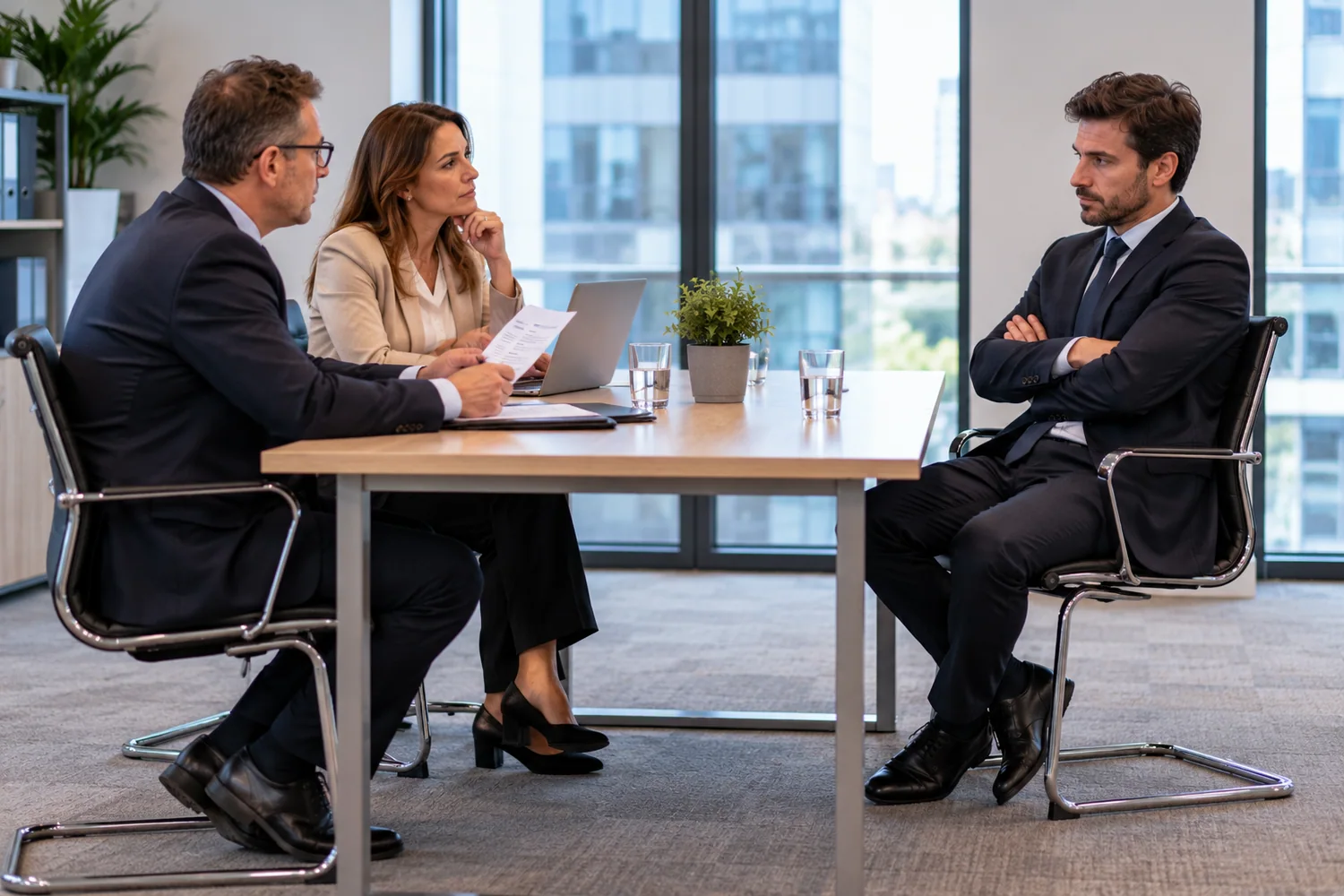
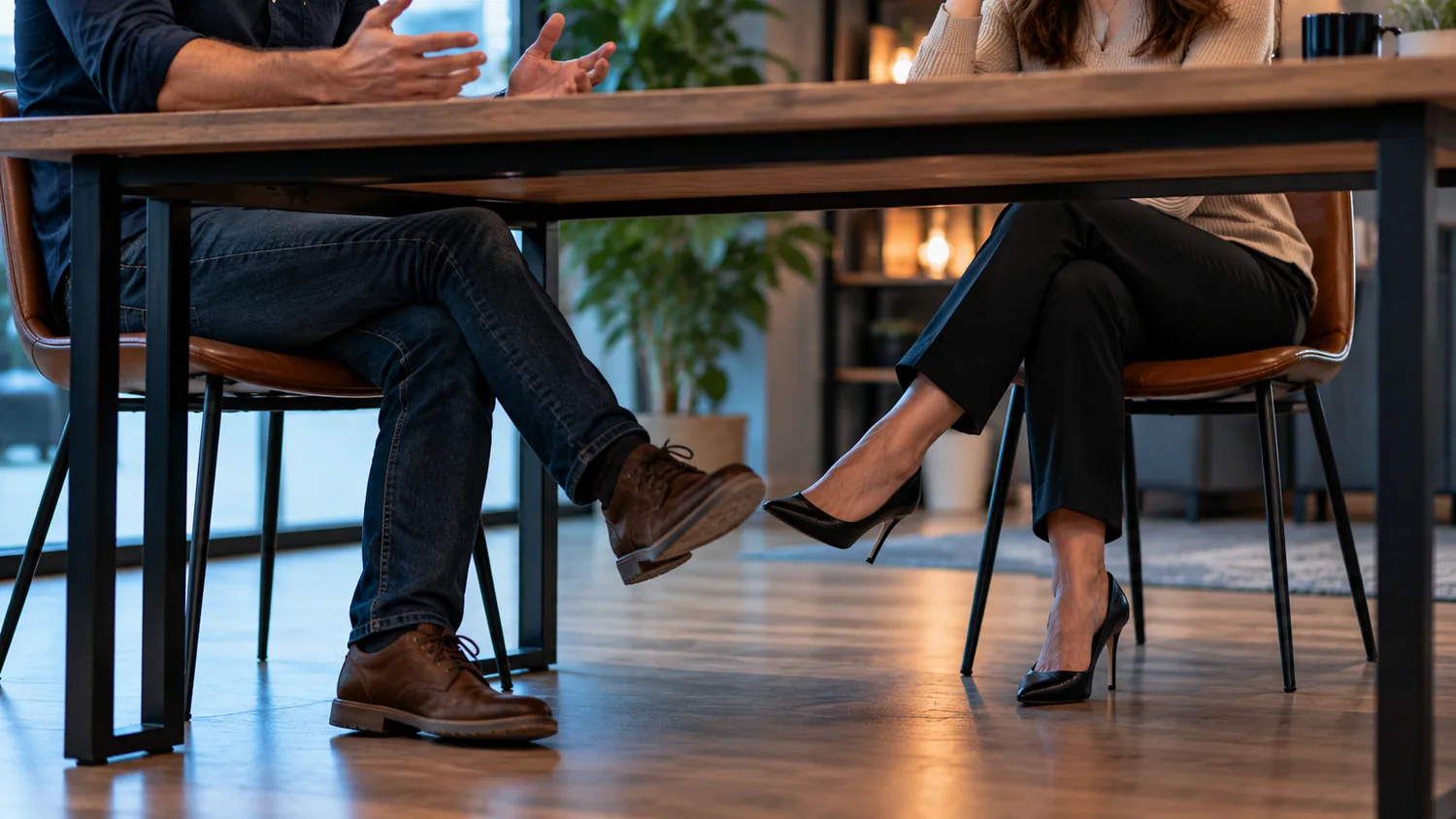
Two colleagues are discussing a report. One leans forwards with their forearms on the table and gestures while speaking. The other sits with ankles crossed under the chair and hands resting on a notebook. Notice the torso orientation, visible gestures and differences in movement. The first may be explaining a complex idea or simply prefer speaking with their hands. The second may be concentrating, comfortable or waiting to contribute. Neither posture alone tells you whether they agree.
Ask what changed
Now imagine the second colleague uncrosses their ankles, moves the notebook closer and turns towards a chart. The movement occurs after the first person points to a figure. This sequence could indicate an attempt to read the chart more clearly. It might accompany interest, disagreement or the practical need to take notes. Try writing a description without any words for emotion.
Scene two: a café conversation
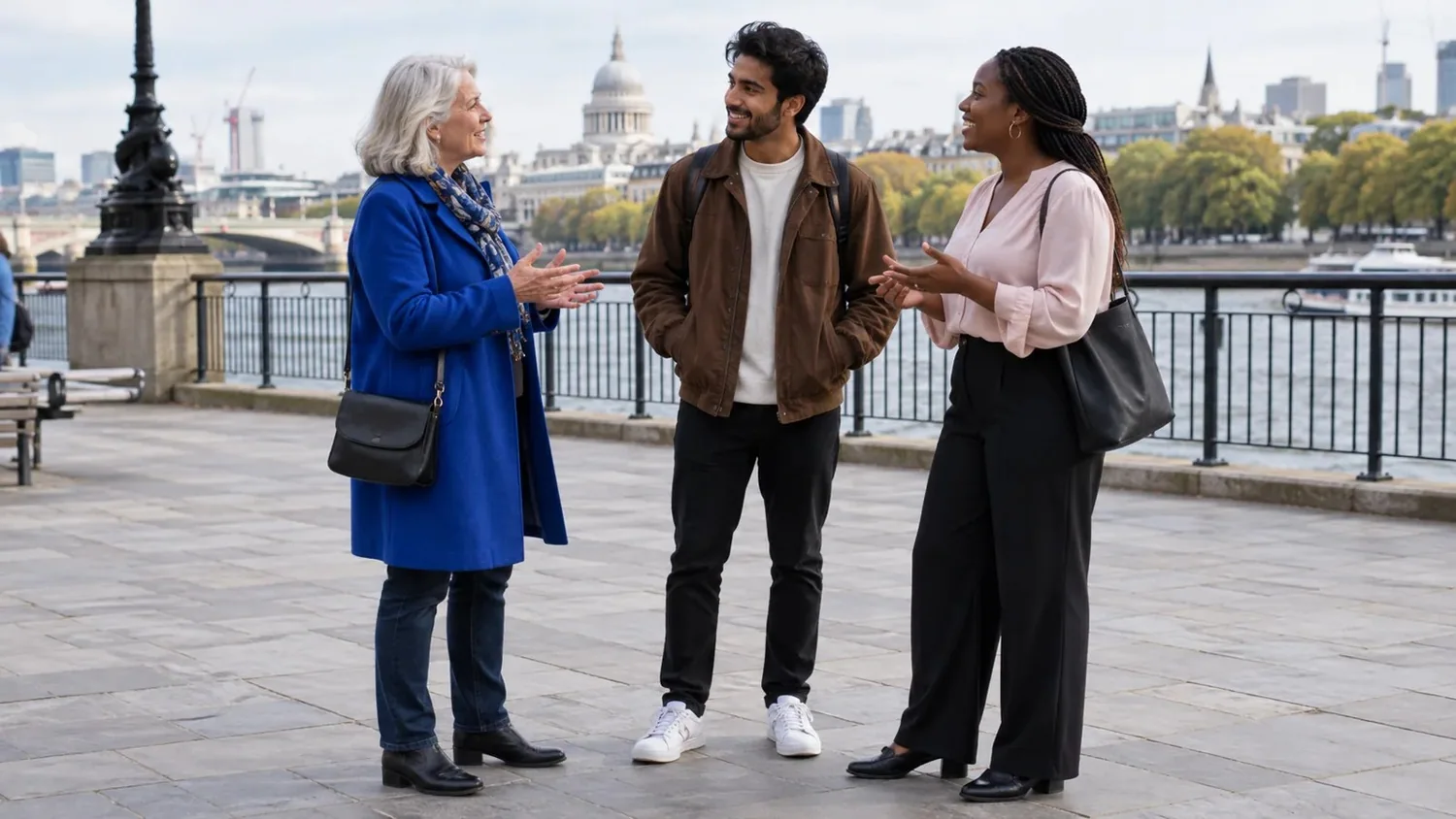
Two friends stand near the entrance. One speaks while facing their companion; the other's head remains turned towards the street. Is the second person distracted? Perhaps, but the street may contain a friend they are waiting for, a delivery vehicle or an approaching bus. Notice whether the head turns back when the speaker asks a question. The follow-up matters more than a single glance.
Check the environment
A café may be loud, cramped or busy with people entering and leaving. One friend steps aside and the other follows. Their change of position might simply clear a route for customers. It would be easy to invent a story about closeness or avoidance, but the physical environment supplies a strong practical explanation. List the objects and movements that a photograph might hide.
Scene three: waiting for a train
Several travellers stand beneath a departure board. One repeatedly shifts weight from leg to leg and glances down the platform. Another stands still with hands in their coat pockets. Both may be waiting for the same service. The first could be cold, checking the arrival or moving for comfort. The second might be equally impatient but less visibly active. Motion does not reveal a private level of emotion.
Put the SEE method to work
For each scene, write one observable detail, two plausible interpretations and one thing you would check if it mattered. Keep in mind the difference between a scene that suggests a question and evidence that answers it. Then invent a new scene from your own day. The strongest observer remains willing to revise a first impression as soon as the next detail appears.