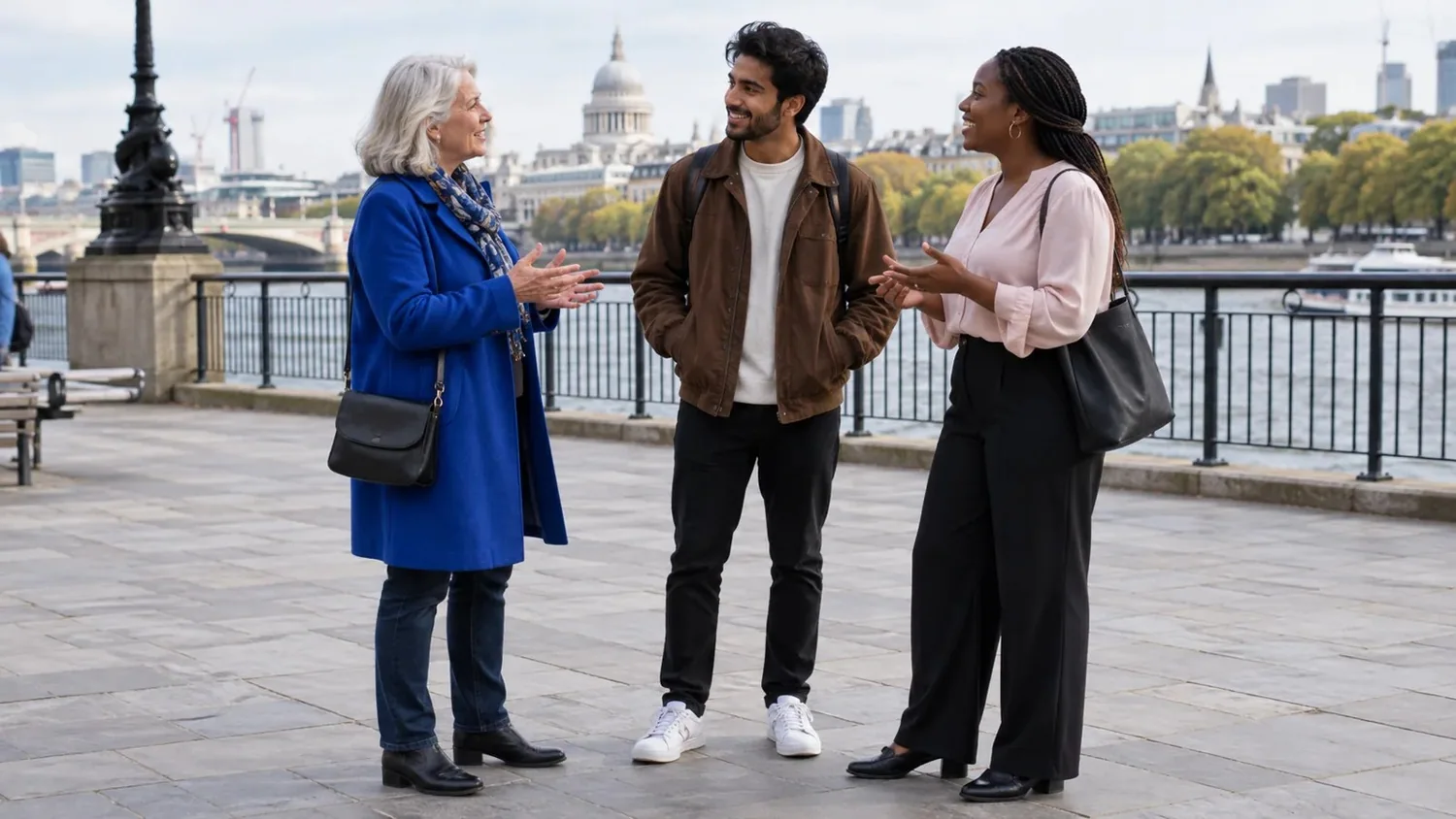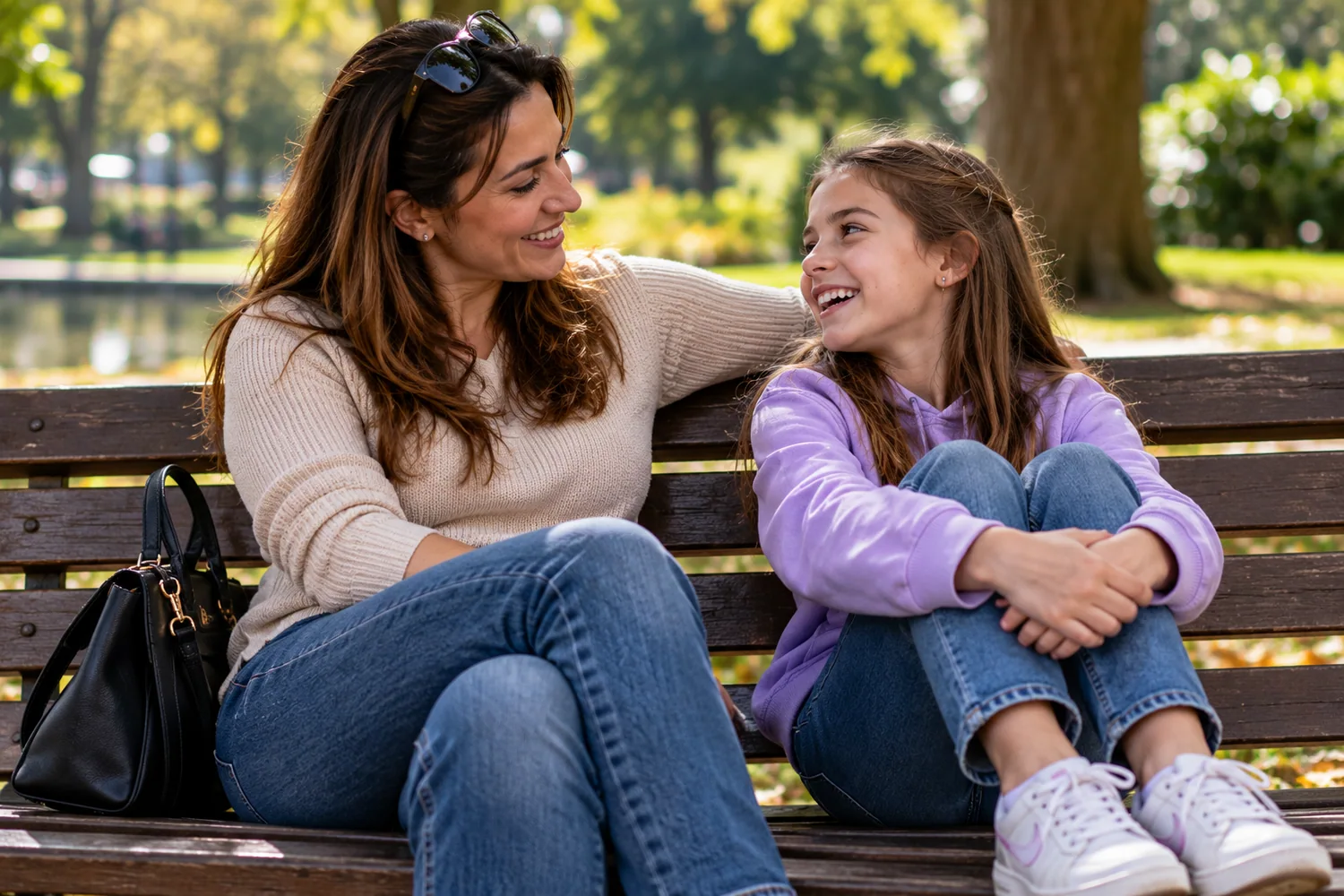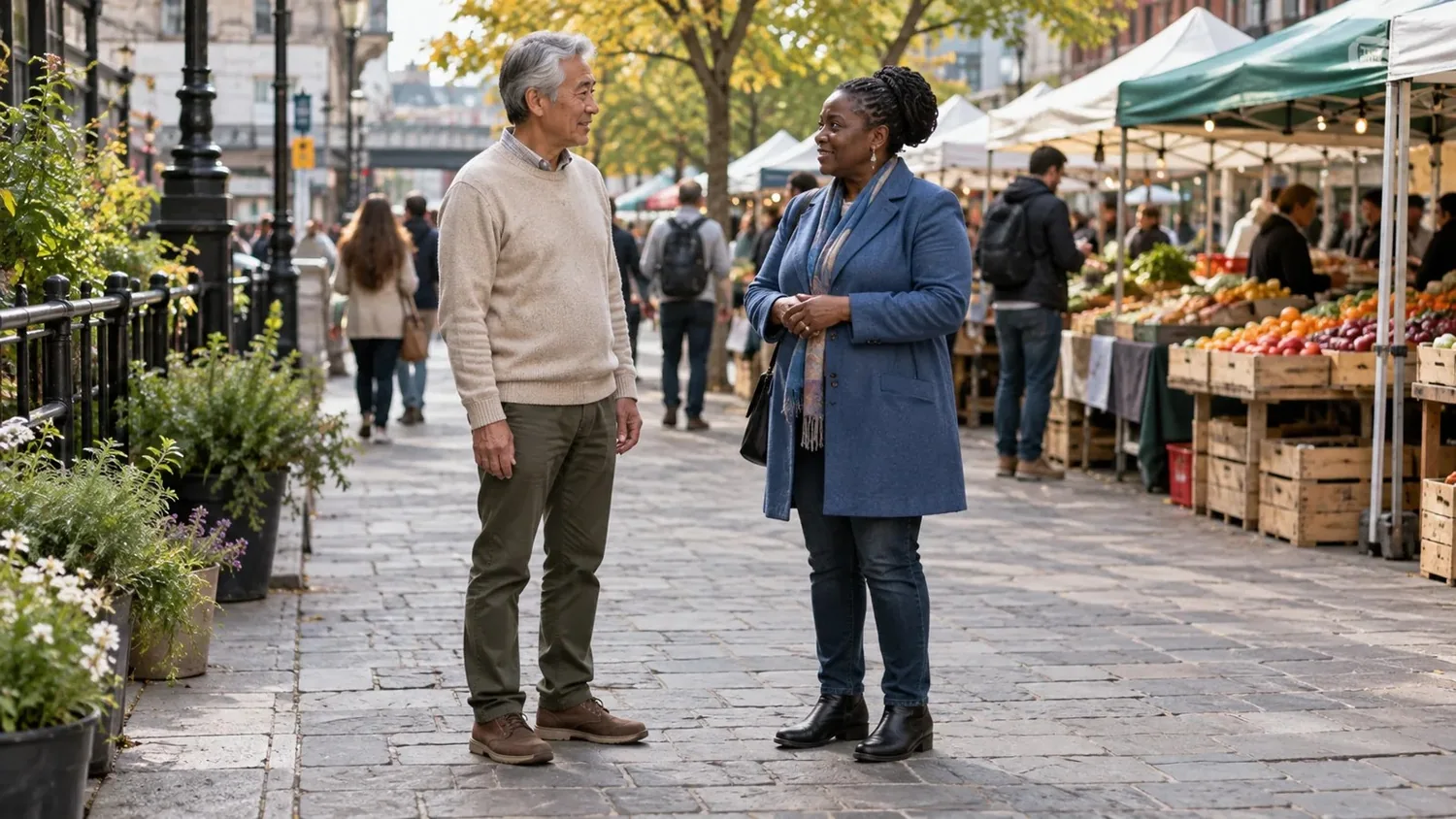
Real situations rarely give us one clear signal at a time.
A conversation may involve facial expressions, posture, gestures, orientation, distance, movement and changes in comfort — all happening together.
Scenario Observation brings these elements into one exercise and challenges you to notice what is happening before deciding what it might mean.
Observe the Whole Scene
When watching an interaction, it can be tempting to focus immediately on the most obvious gesture or facial expression. Instead, widen your observation.
Notice where people are positioned. Look at their posture, feet, hands and orientation. Watch where their attention appears to be directed and whether anything changes as the interaction develops.
The aim is not to find a hidden meaning. The aim is to notice more of what is actually happening.

Look for Changes
A change can sometimes be more useful to observe than a single static behaviour.
Someone may alter their posture, turn away, create more distance, cross their arms, change their expression or suddenly become more animated.

Ask yourself:
What changed?
Then consider:
What was happening immediately before the change?
This helps keep observation connected to the situation rather than interpreting an isolated gesture.
Consider the Context
The same behaviour can occur for many different reasons.
Crossed arms might relate to comfort, temperature, habit or simply a preferred resting position. Looking toward a door could indicate someone wants to leave — or they may simply have heard a noise.
That is why context matters.
Consider the environment, conversation, relationships between the people involved and what is happening around them.
Look for Clusters and Patterns
Avoid treating one behaviour as proof of anything.
Instead, look across multiple channels:
Face · Hands · Arms · Posture · Orientation · Feet · Movement · Distance
Several changes occurring together can give you something worth observing more closely — but they still do not provide certainty about what someone thinks or feels.
The objective is to develop better questions, not instant conclusions.
Put Your Observation to the Test
Scenario Observation exercises present realistic situations containing multiple behavioural cues.
Study the scene carefully. Decide what you noticed, what changed and which details deserve a second look.
You may discover that the most important detail wasn't the one you noticed first.
Observe first. Consider the context. Look for patterns. Then — look again.
A practical way to compare two interpretations
Imagine a colleague suddenly steps away during a busy workshop. One observer says the colleague wants to end the conversation; another notices a trolley approaching from behind. Both noticed the same movement, but the second account includes an environmental event that can be checked. To evaluate the scene, list what happened in order: the trolley moved closer, the colleague stepped aside, and the conversation continued. Sequence provides better evidence than a frozen posture.
Use a two-column comparison: 'observable facts' and 'possible explanations'. Keep movements, positions and objects in the first column; put uncertainty in the second. The method helps you identify missing evidence and stops a plausible story from becoming a supposed fact. When a photograph omits the preceding event, say so explicitly rather than guessing it.
Try this observation exercise
In a training image, find one movement that could have a social explanation and a practical explanation. State what you would need to see next to distinguish them.