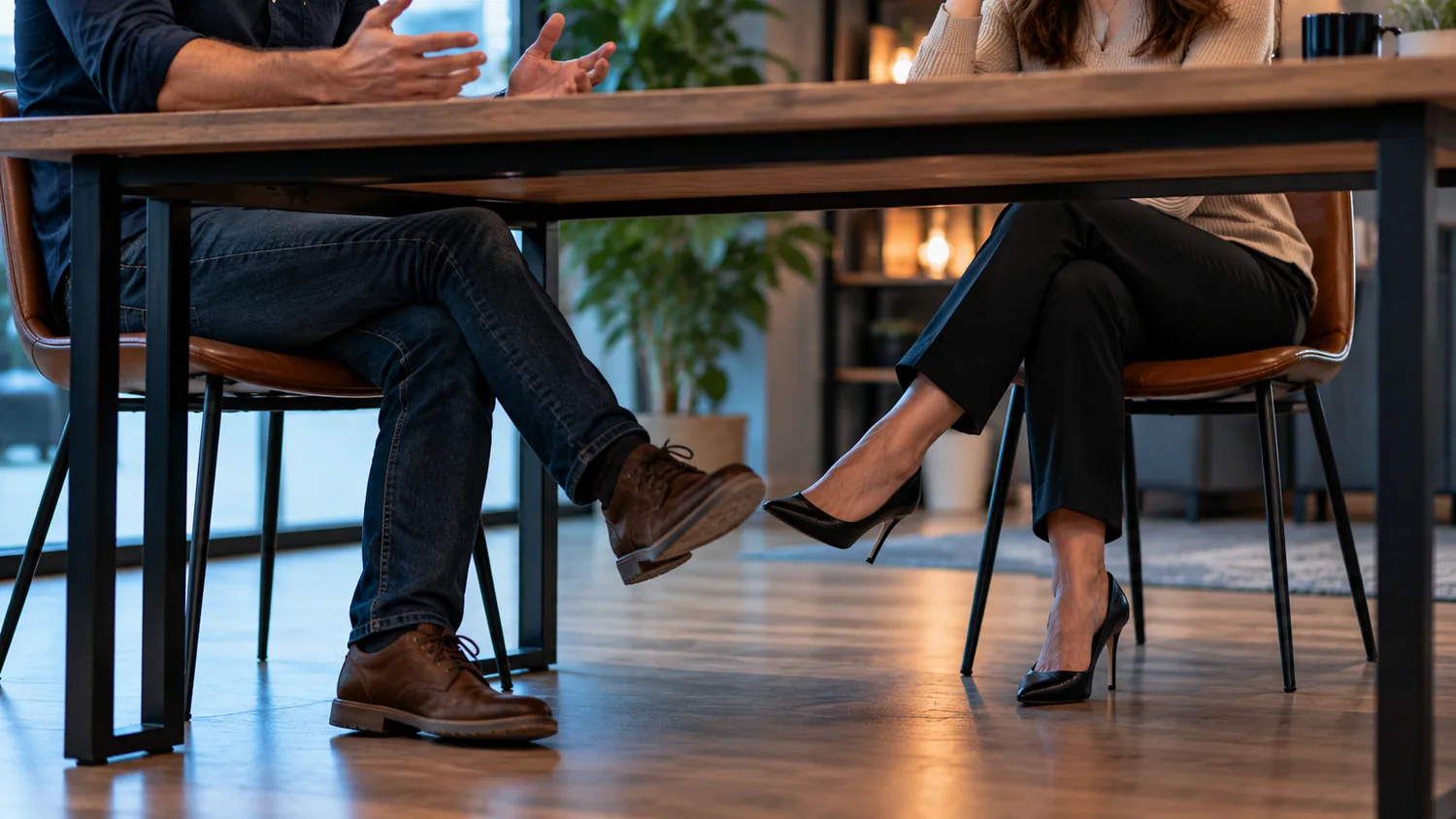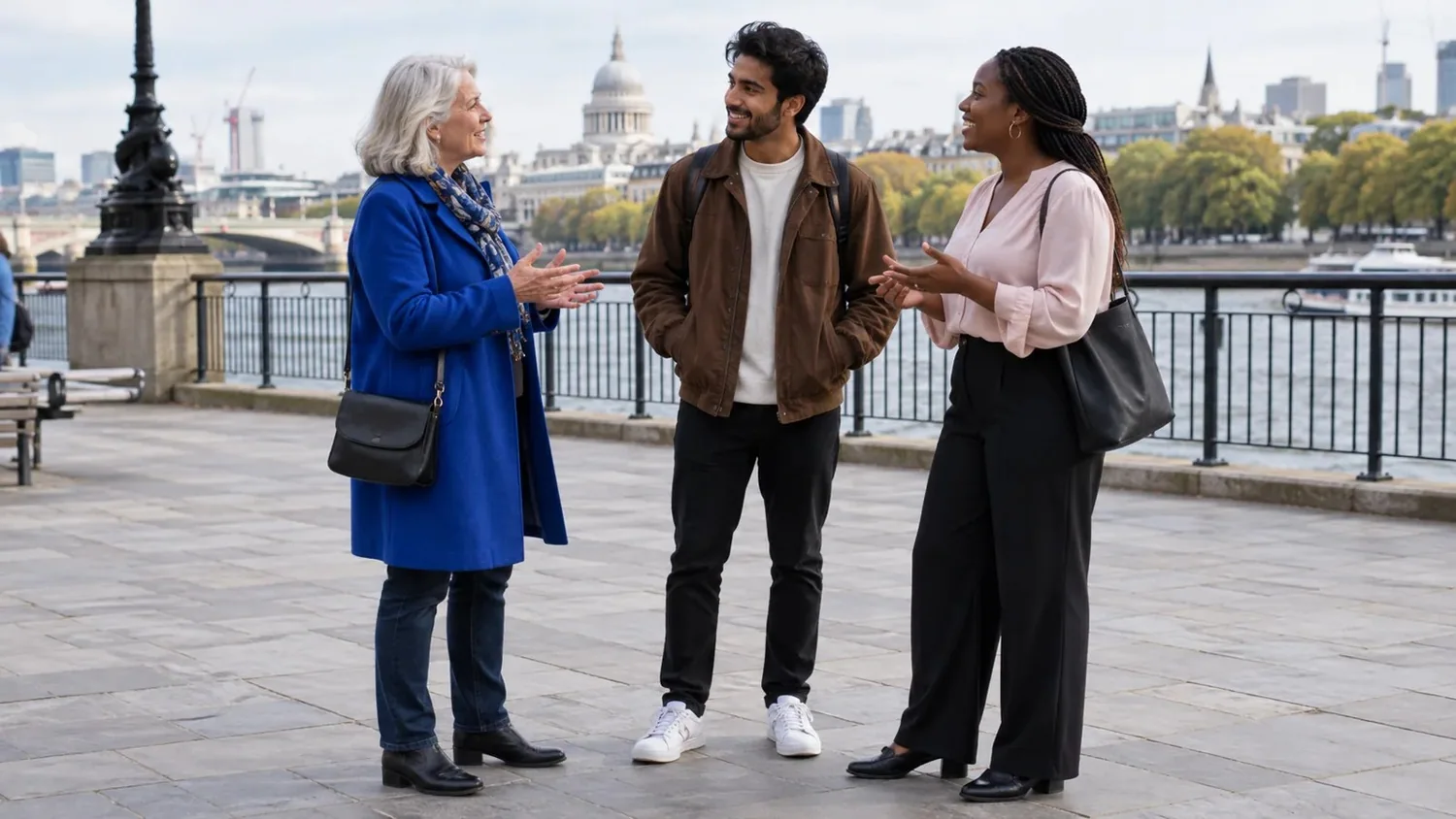
The feet and legs are an important part of whole-body observation. They can change position, direction and movement as people respond to their surroundings, other people and changing situations.
SEE trains you to notice those changes before trying to explain them.
A person may reposition their feet, cross or uncross their legs, turn towards or away from something, increase movement, become unusually still or change the distance between themselves and another person.
These behaviours are worth observing — but none of them has one guaranteed meaning.
Start from the ground up
When observing someone, it is easy to concentrate almost entirely on the face.
Try looking lower.

Notice the position of the feet and legs. Are they relaxed or moving? Where are they oriented? Has their position changed since the interaction began?
The objective isn't to immediately decide what the behaviour means.
The first question is simply:
“What did I notice?”
Notice changes
A change can be more useful to observe than a single static position. Someone who has been sitting still may suddenly begin moving a foot. Legs may uncross. A person's stance may change. Their feet may turn towards another person, an object or an exit.
The important part is recognising that something changed. Then consider what was happening immediately before and during that change.
Consider the whole body
Feet and legs should never be interpreted in isolation.
Look upwards.
What are the hands doing? Has posture changed? What happened to the shoulders or face? Did several behaviours change around the same time?
Combining observations helps you recognise clusters and patterns rather than relying on a single movement.
Context matters
Crossed legs don't automatically mean discomfort.
Moving feet don't automatically mean nervousness.
Turning towards a door doesn't automatically mean someone wants to leave.
People move because of comfort, habit, temperature, available space, physical needs, other people and countless other factors.
SEE isn't about memorising a dictionary of gestures.
It's about becoming better at seeing what actually happened before considering what it might mean.
Start at the feet. Observe the change. Consider the context. Then look again.
A practical foot-position comparison
Picture a passenger waiting beside a departure board. Their feet initially face the board while they check a platform number. When an announcement begins, one foot pivots towards the stairs and their hand moves to the luggage handle. This sequence fits preparation to move. However, if the passenger keeps studying the board and does not gather their belongings, the same foot angle carries less information. Direction becomes useful only in relation to the task and what happens next.
Observe individual patterns as well as changes. Some people routinely stand with feet apart or rest more weight on one leg. A single frame cannot tell whether a position is new. Footwear, pain, the floor surface and nearby obstacles may affect stance, so avoid using unusual leg positions as a measure of confidence or honesty.
Try this observation exercise
For a short walking clip, note the feet before and after a change of direction. Identify the route, obstacle or task that might explain the movement. Keep interpretation separate from description.