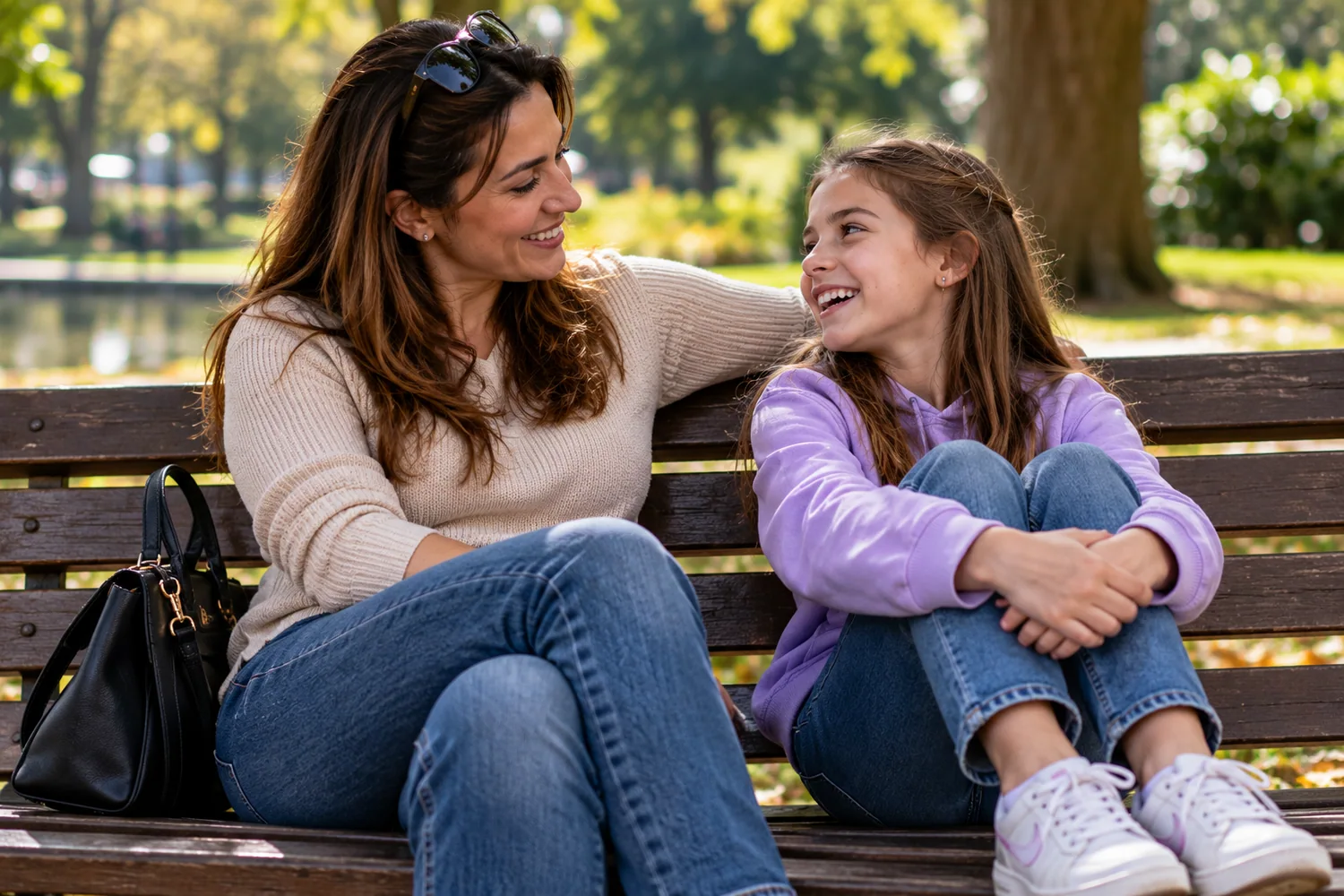

During a conversation, you may notice that someone's face remains towards you while one foot points along the path. It is tempting to decide that they want to leave. Perhaps they do. Perhaps they have simply stopped halfway through turning, made room for a passer-by or found a comfortable way to stand.
Feet are useful to observe because they help people position themselves and move through the world. Their direction and changes in stance can add context to an interaction. They are not a separate language with a reliable translation for every movement. Careful observation begins with the shoes you can see, not the intentions you imagine.
What foot orientation actually shows
Foot orientation is the direction in which a foot points. You can describe both feet facing a companion, one foot angled towards a doorway or the feet arranged diagonally across a narrow space. These descriptions are concrete. They say where the body is positioned without claiming why.
Notice the surface and available room. A pavement edge, table leg, step or bag may constrain the stance. Footwear also matters: a person may reposition to balance or relieve pressure. A movement that looks socially significant in an empty room may be an ordinary adjustment in a crowded one.
Direction is a clue to positioning, not proof of attention
Attention cannot be measured simply by the angle of a shoe. Someone can listen while preparing to cross a road, or face a speaker while thinking about something else. Use foot direction alongside the person's words, head direction and subsequent actions. Even then, leave room for uncertainty.
At a station, a traveller may keep one foot along the platform while answering a question. If they say their train is arriving and begin gathering luggage, preparation to move is a sensible interpretation. Without those details, the shoe direction alone supports much less.
Changes in stance often tell a practical story
A stance is the arrangement of the feet and the distribution of weight. Notice whether someone widens or narrows their stance, shifts weight to another leg or moves a foot behind them. Compare the new position with the earlier one, rather than comparing the person with an imagined ideal posture.
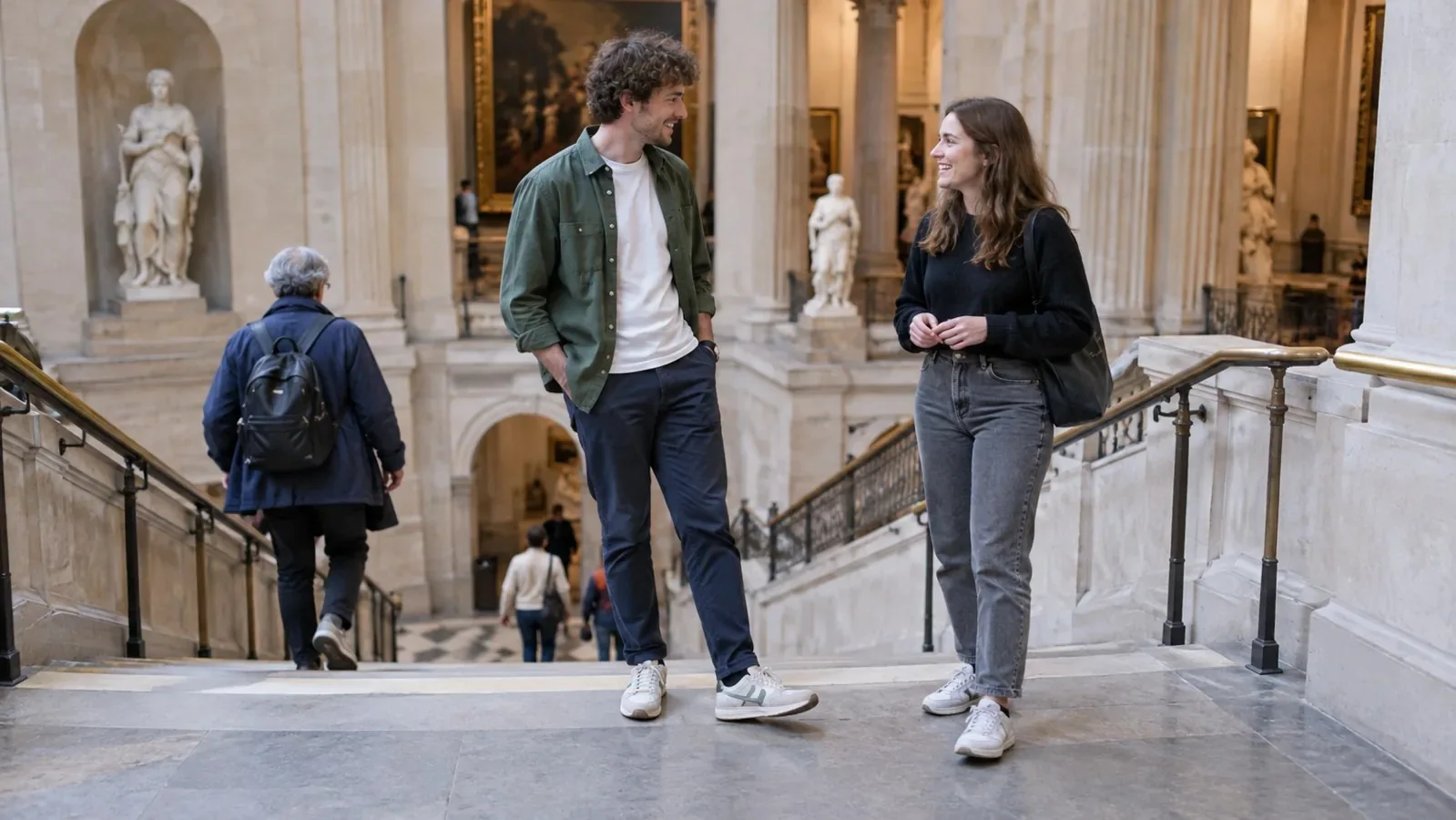
Consider two friends talking on a museum staircase landing. One steps sideways and turns a foot towards the stairs. A visitor is trying to pass. The movement has a visible practical purpose: clearing the route. Calling it rejection would ignore the strongest evidence in the scene.
Keep balance and accessibility in view
People do not all stand or move in the same way. Pain, fatigue, injury, mobility differences and habitual positioning can affect stance. You do not need to identify a condition to recognise that physical explanations are possible. Avoid interpreting an unusual movement as an unusual attitude.
If someone repeatedly transfers weight during a long queue, a considerate response might be to offer a seat. You need not establish whether they are impatient, tired or uncomfortable first. Observation can guide a practical kindness while the cause remains unknown.
Notice steps towards and away from others
A step changes distance as well as direction. Someone moving closer may be trying to hear, see an object or pass behind another person. Someone stepping back may be restoring space, avoiding an obstacle or making room for a bag. The movement is observable; its social meaning depends on what surrounds it.
Pay attention to the response. If one person approaches and the other steps back, the gap may settle at a different distance. It is reasonable to allow that space. It is less reasonable to conclude that the second person dislikes the first. Their preferred distance may differ, or the setting may require adjustment.
The SEE Posture & Orientation article explores how these lower-body movements relate to the direction and position of the torso.
Movement and stillness both need context
Tapping a foot, bouncing a knee or swinging a lower leg may draw your eye because movement is noticeable. Describe the action before choosing a label. How often does it occur? Did it start after the person sat down, when music began or while waiting for a reply?
A tapping foot might accompany anticipation, restlessness, habit or rhythm. Sudden stillness might reflect concentration or a pause in movement. Neither is a dependable test of honesty. Avoid treating repeated movement as a confession or treating stillness as evidence that someone is concealing something.
One photograph leaves a sequence missing
A photograph can show a foot raised or a knee turned outward, but not necessarily the action that produced the position. The person may be stepping, stretching or adjusting a seat. In training, describe only what the frame supports. When watching a real interaction, allow the next moments to clarify the movement.
Connect feet with the rest of the body
Suppose a colleague turns both feet towards a doorway, shifts the torso in the same direction and lifts a work bag. Those movements together fit preparation to leave more closely than a single angled foot would. Their words can then confirm a practical plan: “I need to get to my next meeting.”
Now imagine their feet face the doorway while they lean towards you to hear and continue asking questions. The observations are mixed. Do not force them into a single story. A person can be engaged in conversation and aware of another task at the same time.
Patterns help you describe a situation more fully. They do not transform uncertain interpretations into certainty. The person remains the best source of information about what they intend, and they may have several competing concerns.
Practise with a three-part note
Choose a brief everyday moment without staring. First, write or mentally state a visible observation: “He moved his right foot backwards.” Next, identify the context: “A trolley passed beside him.” Finally, offer a cautious interpretation: “He may have been making room.” Keep those three parts separate.
Try the same exercise with a different scene and find at least two possible explanations. If you are part of the conversation, a simple question such as “Would you like to sit down?” may be more useful than silently classifying the stance. Explore SEE's Feet & Legs guide for more observation practice.
Let direction open a question
Feet can reveal visible direction, position and preparation for movement. What those details mean for attention or intention still needs checking. Follow SEE's Observe → Interpret → Check → Reconsider approach: notice the stance, consider the surroundings, watch the next action and revise your explanation when necessary. A well-observed foot position is a starting point, not a verdict.