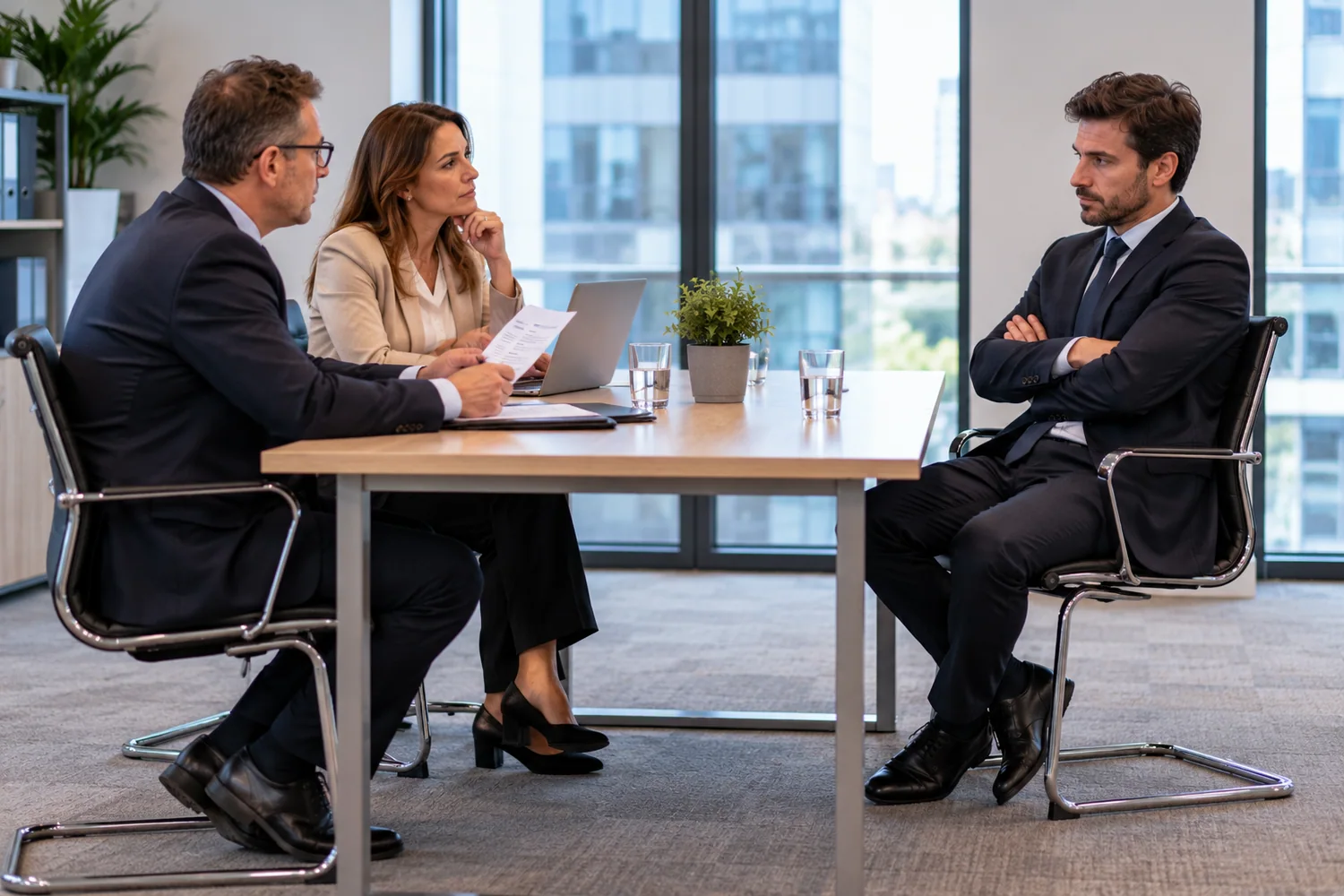

A difficult question, an unexpected delay or a sudden change of plan can alter how people move. Someone may grip a pen, lean away from a screen, adjust their feet or become unusually still. These are useful observations, but they do not automatically reveal fear, deception or a particular level of stress.
Identify what changed in the situation
A new task may be more important than the movement itself. Did a meeting become louder? Did an interviewer ask for exact figures? Did the available time shrink? People change position for many reasons, including practical preparation. Understanding the immediate event helps prevent a visible action from becoming an invented emotional story.
Watch several channels without turning them into a diagnosis
You might notice a quieter voice alongside reduced gestures or a change in breathing and posture. Such a cluster can indicate that the interaction has shifted. It still does not identify the cause. The same pattern could accompany focused calculation, fatigue, uncertainty or discomfort. People vary in which cues they display, and some show very few.
Stillness deserves as much care as movement
A person who stops fidgeting might be concentrating, listening carefully or pausing before replying. Someone who starts moving more may be restless, energised or simply adjusting to a chair. Treat both stillness and movement as observations. Neither is a reliable shortcut to certainty about what someone is hiding.
Pressure is not proof of wrongdoing
People may become uncomfortable when wrongly accused, evaluated or interrupted. Reading stress-like cues as evidence of guilt is unfair. When truth matters, examine verifiable information and ask clear, non-leading questions. Body language can help you notice the need to slow down or explain something, but it cannot replace factual evidence.
Consider supportive responses
If a person appears physically strained, offering a pause, water or a clearer question may be helpful whether or not you understand the cause. Respect their answer if they explain what they need. Observation is at its best when it improves the interaction, not when it becomes a private competition to guess emotions.
Make a before-and-after note
Write down how someone was sitting before a new question, what happened, and what changed. Include one practical alternative: a chair position, noise, temperature or physical task. Look for the next response rather than stopping at your first explanation. That sequence is the basis of SEE's Observe → Interpret → Check → Reconsider method.
A difficult question is not a diagnosis
In a project meeting, a colleague is asked to estimate the cost of a change they have not yet calculated. They pause, sit upright and clasp their hands. The temptation is to label the movements stress or concealment. But the request itself calls for careful calculation, and nobody can know the colleague's private state from those cues. The useful timeline begins with the question, then records the pause and movement, and ends with the response.
Pressure can make people more active or less active, and an observer should not treat either pattern as a lie detector. If the meeting needs an accurate estimate, the sensible action is to allow time or request a written calculation, not to speculate about the posture. The words and subsequent work matter more than a dramatic interpretation of folded hands.
Try this observation exercise
Write an account of a difficult question using only visible actions and spoken facts. Highlight where you might otherwise have inserted an unsupported motive.