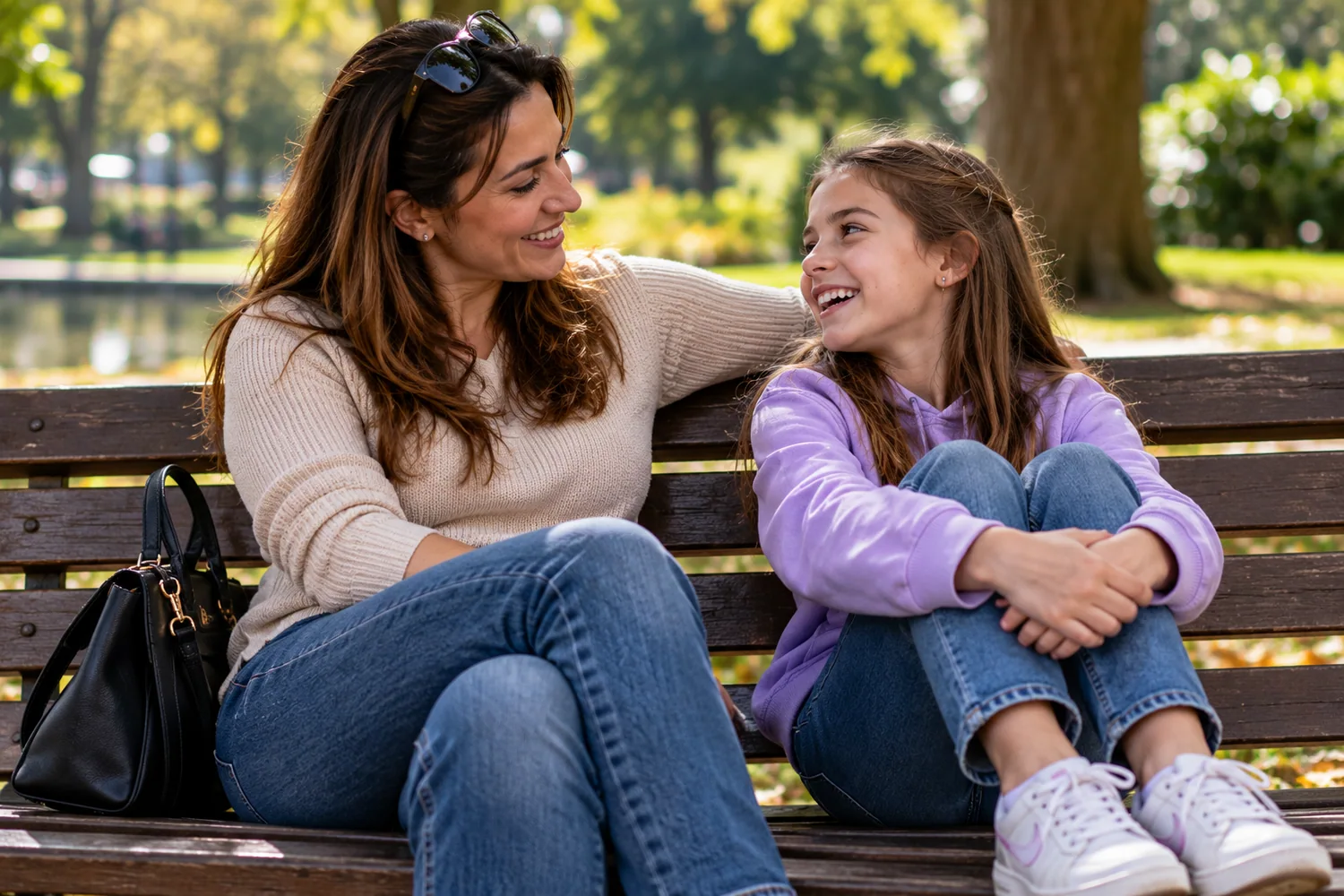

A smile is easy to recognise and tempting to interpret. You may assume a smiling person is happy, agreeable or comfortable. But people smile while greeting strangers, apologising, comforting a child or managing an awkward exchange. Seeing a smile tells you something about the face; it does not supply a complete account of the person's inner experience.
Observe what the face is doing
Notice whether the mouth rises evenly, whether cheeks lift and how long the expression lasts. These details help describe visible movement. They are not a guaranteed translation key. Expressions vary between individuals and circumstances, and a person can deliberately smile for social reasons without intending deception.
Social smiles have practical roles
A shop assistant may smile to welcome a visitor. A colleague may smile briefly before presenting difficult feedback. A friend may smile to reassure someone who is anxious. In each case the expression can support a social task. The immediate words and situation may explain its function better than a label such as 'real' or 'fake'.
Watch transitions
A smile that follows a joke, fades during a serious question and returns during a greeting forms a sequence. The changes may help you follow the interaction. Still, you cannot know the person's internal state just from the timing. Compare the face with the spoken conversation and any wider movements, while allowing that different cues can coexist.
Do not punish people for different expressions
Some people smile readily; others rarely do, even when they are pleased. Facial mobility, culture, experience and personal preference affect expression. Expecting everyone to display the same smile creates unnecessary misunderstandings. A neutral face is not a rejection, and a smiling face is not consent to something the person has not agreed to.
Look beyond the face
Suppose a visitor smiles while moving away from a crowded doorway. They may be trying to be polite while finding room. Someone else smiles and keeps approaching because they are excited to greet a friend. The smile is only part of what you can observe. Body orientation, movement, speech and the surroundings all contribute to a more complete description.
A SEE observation exercise
Choose a scene with two different smiles. Describe the mouth and cheeks, the context and what happened afterwards. Then list at least two plausible purposes for each expression. If the person's view matters, ask rather than assume. The aim is to notice facial signals carefully while keeping the other person's experience their own.