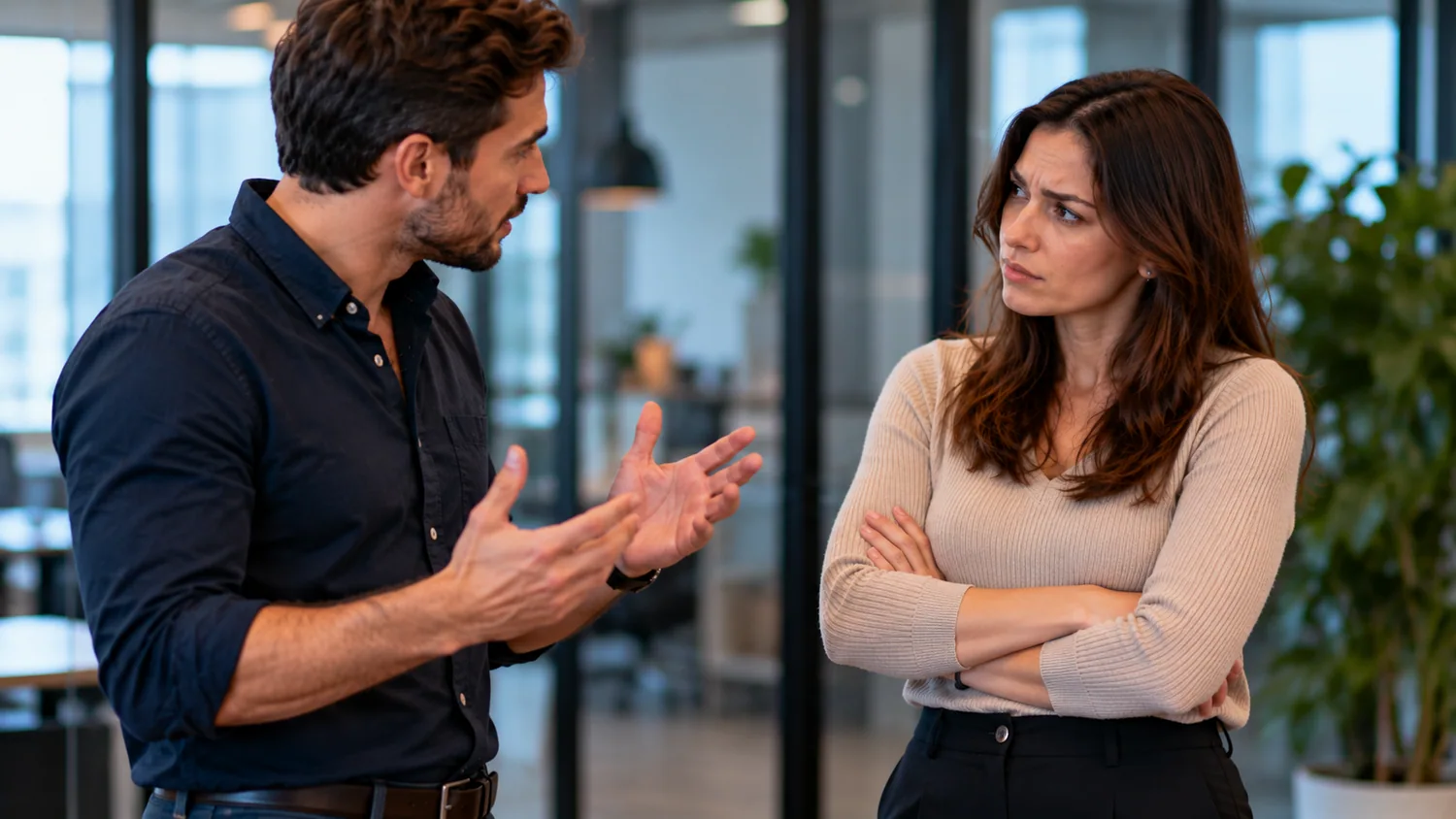

A smile can catch your attention so quickly that you miss everything beneath it. Someone looks towards you, answers politely and appears interested. Meanwhile, their shoulders turn towards the exit, their hand gathers a bag and their feet begin to reposition. The face is part of this moment, but it is not the whole moment.
Body language includes the way people position and move their entire bodies within a situation. Looking beyond facial expressions gives you a fuller description of what is happening. It does not give you direct access to another person's thoughts. The aim is to notice more carefully, consider several explanations and check what you can.
Start with the scene, then the person
Before concentrating on eyebrows or lips, take in the surroundings. Is the person standing on a crowded platform, sitting on an uncomfortable chair or trying to hear over music? Are they carrying something heavy? Is another person approaching? These details can explain movements that otherwise look personal.
Imagine a colleague turning away during a conversation. You could interpret that as loss of interest. Then you notice a delivery arriving behind them. Their movement may be a response to a practical responsibility. The visible turn is real; your first explanation needs updating.
SEE's approach is Observe → Interpret → Check → Reconsider. Observation describes the movement. Interpretation suggests a possibility. Checking brings in the circumstances or a respectful question. Reconsidering means allowing new information to change your understanding.
Head direction and body orientation can differ
Body orientation means the direction a body part faces. The head, shoulders, torso, hips and feet need not point the same way. Someone can keep their face towards a companion while the rest of their body begins turning towards a doorway.
Describe the difference without supplying a motive
“Her head faces the speaker while her torso angles towards the aisle” is a useful observation. “She secretly wants to leave” adds a motive you have not established. She may be preparing to move, making room, watching a child or easing a stiff back. Several explanations fit the same arrangement.
When orientation changes during an interaction, notice what happens next. Does the person return to their previous position, take a step or explain that they need to go? A sequence offers more context than a frozen instant. SEE's Posture & Orientation guide offers a useful starting point for this wider view.
Feet and legs show positioning and movement
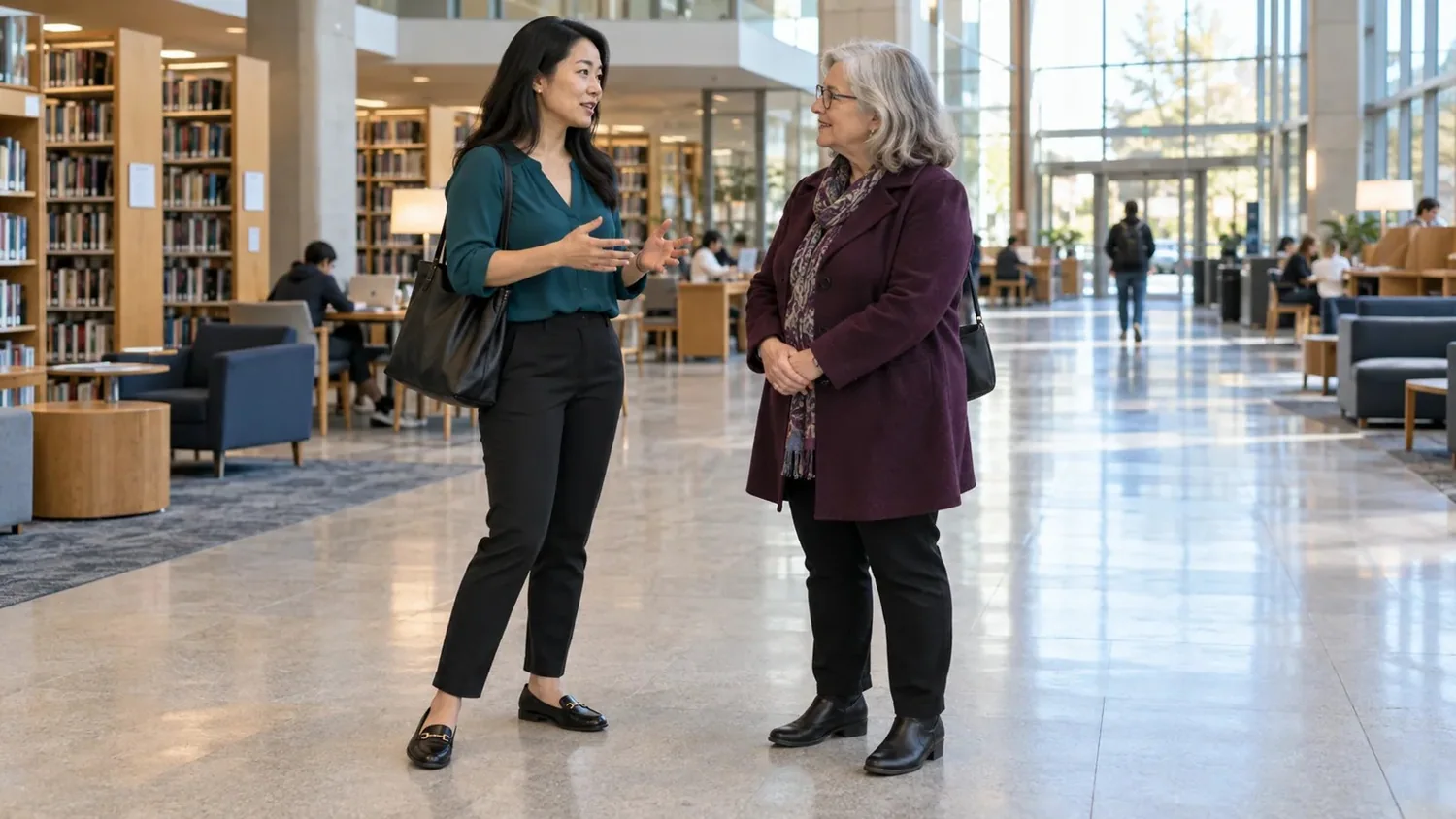
The lower body helps people balance, move and negotiate space. Look at the direction of the shoes, the width of the stance, changes in weight and any steps towards or away from someone. In a seated conversation, notice leg position and changes rather than deciding that one arrangement has a fixed meaning.
A foot pointing towards an exit may accompany preparation to leave. It may also reflect the shape of the room, a comfortable stance or where the person was already walking. Foot direction deserves attention because it adds information about positioning, not because feet are a guaranteed source of hidden truth.
At a shop counter, someone might shift from one foot to the other while listening attentively. Standing for a long time is an ordinary explanation. If they also check the time and say their bus is due, the practical picture becomes clearer. Explore the Feet & Legs guide to practise describing those details.
Hands and arms contribute to the conversation
Hands can illustrate size, mark emphasis, indicate a direction or interact with everyday objects. A person describing a wide shelf may spread their hands apart. Someone explaining a route may trace its shape. These movements contribute to the explanation and should be understood alongside what is being said.
Pay attention to what the hands are doing
Notice whether hands are open, loosely clasped, holding a cup or gripping a strap. Distinguish visible pressure from assumed emotion. “His fingers tighten around the bag handle” is more precise than “He is anxious”. The bag may be heavy, slipping or about to be moved.
Arms folded across the torso can look different when accompanied by relaxed shoulders and a steady conversation than when followed by stepping back and an explicit request for space. Neither combination proves an internal state. The Hands & Arms guide helps extend observation beyond familiar gesture labels.
Shoulders and posture change with ordinary demands
Raised shoulders, a forward lean or a lowered upper body may attract notice. Ask what the body is responding to. A person may lean forward to hear, raise a shoulder to keep a strap in place or sit back because a chair offers support. Posture has physical functions as well as possible social relevance.
A friend's position at dinner may change when the waiter arrives, when the conversation becomes quieter or when sunlight reaches their eyes. Record these changes against the situation. Avoid turning a momentary posture into a personality judgement such as confident, weak or dishonest.
Movement connects the separate observations
The order of actions matters. Suppose someone smiles, puts down a glass, turns towards a coat and stands. That sequence is compatible with ending a visit. Compare it with someone smiling, turning briefly to retrieve a tissue and settling back into conversation. A similar facial movement appears in two different practical sequences.
You rarely see everything, and a photograph cannot show what came before or after. Treat gaps as gaps. Do not invent a missing story to make the observations fit. Each individual also has their own habits, mobility and ways of communicating; similarity between two people's movements does not make their experiences identical.
A whole-body observation exercise
During an ordinary conversation, take a brief, natural look at the scene. Notice orientation, hands, stance and movement alongside the face. Choose one change and describe it in plain language. Suggest two possible explanations, including a practical one. Then see whether the next action or the person's own words clarify it.
Avoid staring or monitoring someone as a test. Good observation should help you respond considerately: make room, reduce noise or ask whether they have time to continue. The useful outcome is a better interaction, not a private verdict.
Look beyond the smile
Facial expressions deserve attention, but the body and setting complete the visible picture. Notice how direction, posture, hands and movement work together. Keep description separate from explanation and remain willing to revise it. Looking again is valuable because there is usually more to observe, not because there is always a secret to uncover.